1 Getting There
By Air — The most convenient gateway is Tunxi International Airport (TXN) in Huangshan city. It has domestic flights from Beijing, Shanghai, Guangzhou, Xi'an, Chengdu, and a few international routes (Seoul, Hong Kong). Shanghai's airports (PVG/SHA) are the most common international arrival point, from which you can take a high-speed train.
By Train — The Beijing–Fuzhou and Hangzhou–Huangshan high-speed rail lines put the region within easy reach. From Shanghai Hongqiao Station, it's just 2.5 hours to Huangshan North Station (黄山北站). From there, buses run to Tunxi Old Street (20 min) and the main scenic areas.
By Road — Well-maintained expressways connect all major towns. Renting a car with a driver is affordable (¥400–600/day) and gives you flexibility to explore off-the-beaten-path villages.
2 Best Time to Visit
Spring (March–May) is perhaps the most beautiful season. Rape flowers carpet the valleys in brilliant yellow, and tea terraces are lush green. The weather is mild, though rain is common — bring a light waterproof jacket.
Autumn (September–November) brings crisp air, clear skies, and spectacular fall foliage in the mountains. This is the best time for hiking Yellow Mountain.
Summer is hot and humid with frequent thunderstorms. Mornings are often misty — atmospheric for village photography, but cloud cover may obscure mountain views. Winter offers rare snow on the peaks but many village homestays lack central heating.
📸 Photography Tip
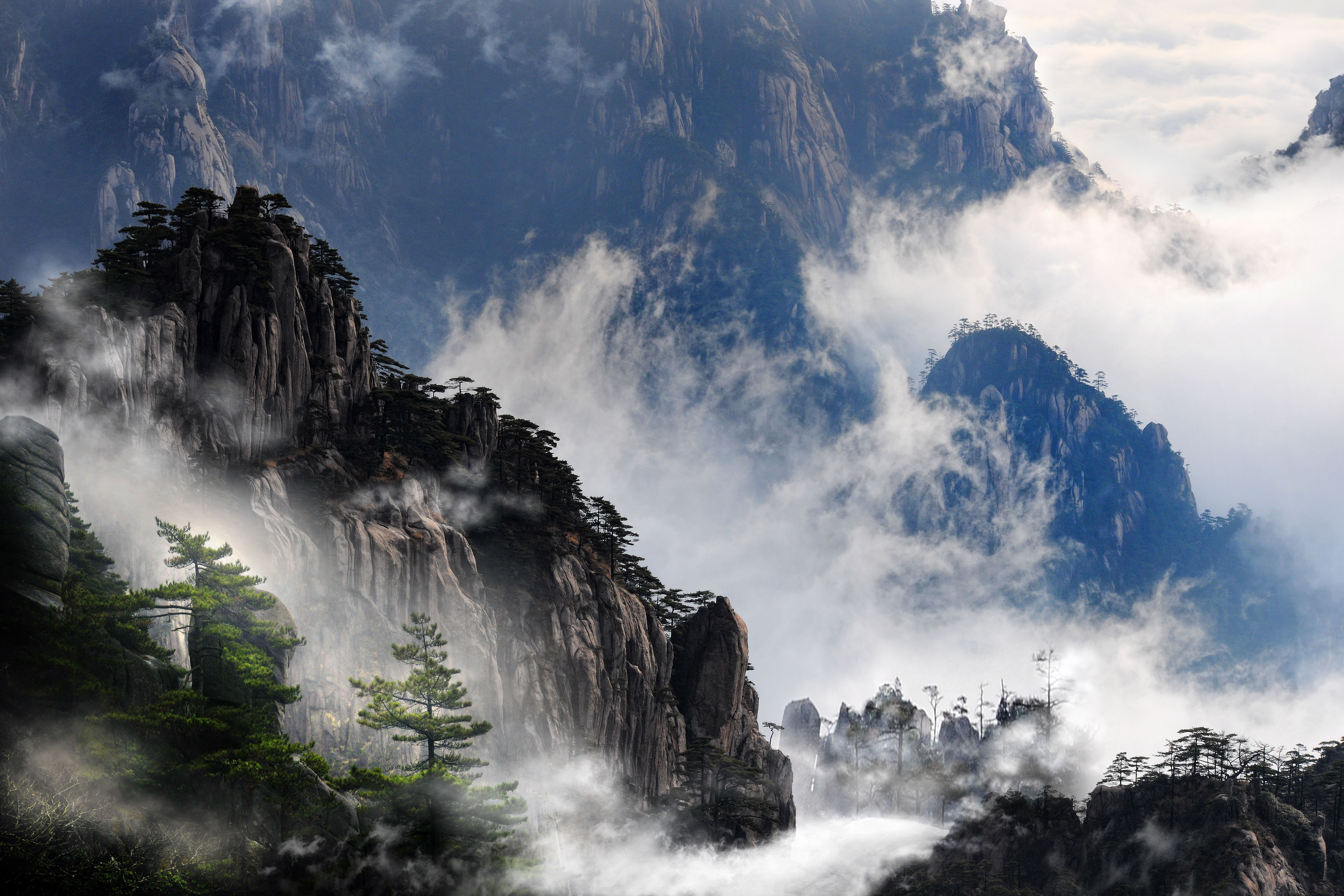
For the iconic misty-mountain shot on Yellow Mountain, go right after a rainstorm when the clouds begin to clear. Arrive at the summit before sunrise for the famous "sea of clouds."
3 Top Attractions
Yellow Mountain (黄山 — Huángshān)
China's most famous mountain and a UNESCO World Heritage site. Its granite peaks, ancient twisted pines, and hot springs have inspired poets and painters for millennia. The four must-see wonders: strange pines, grotesque rocks, sea of clouds, and hot springs. The sunrise from Bright Summit Peak (光明顶) is legendary.
⏱ Allow 2 days — one to ascend and explore, one for sunrise and descent. Stay overnight at a summit hotel.
Hongcun Ancient Village (宏村)
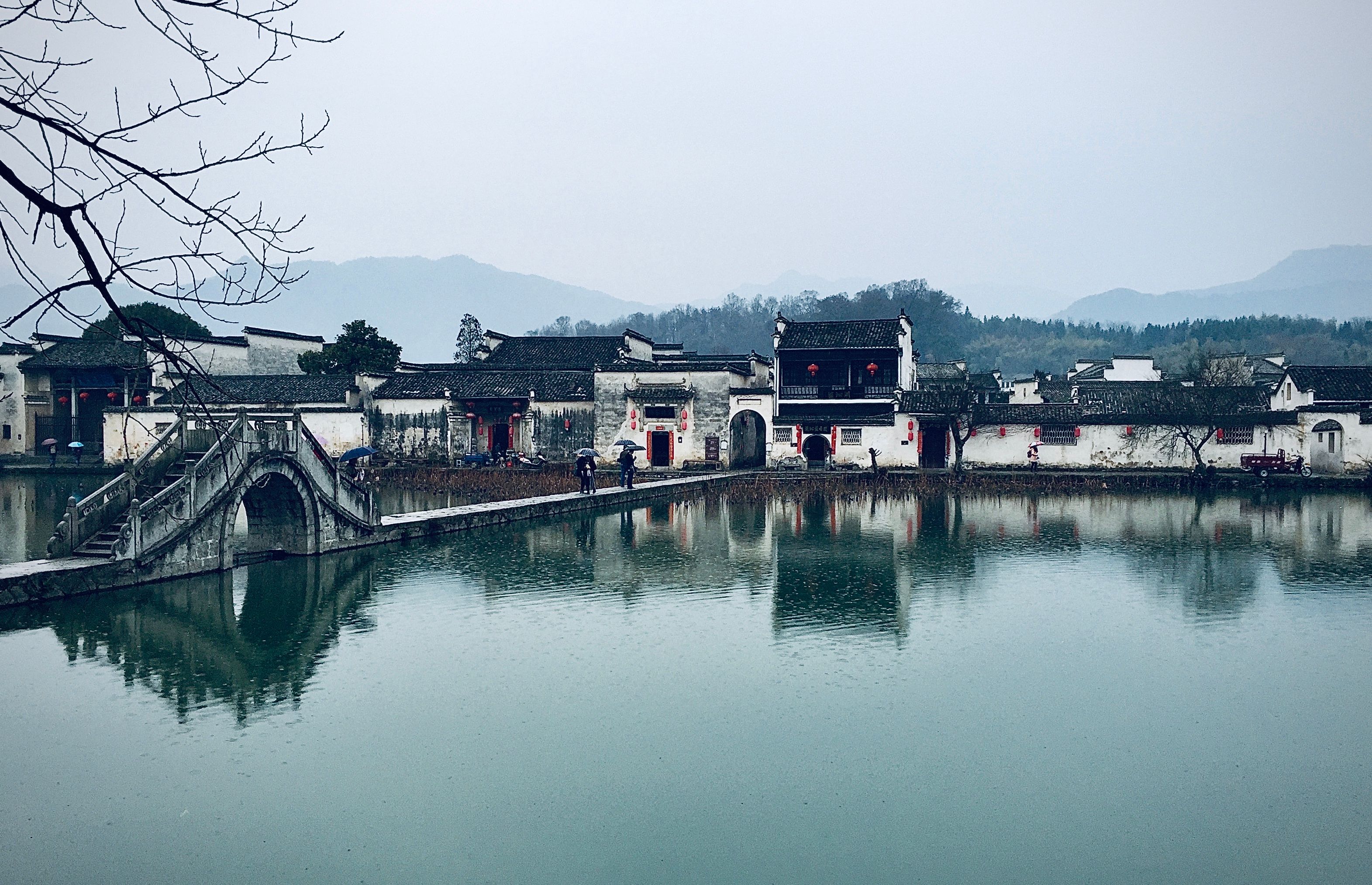
A UNESCO-listed village established in 1131, Hongcun is the epitome of Huizhou architecture. Its layout mimics the shape of an ox — the "ox stomach" Moon Pond (月沼) being the most photographed spot in the village. The film Crouching Tiger, Hidden Dragon was shot here. Wander through narrow lanes, past white-washed walls, grey-tiled roofs, and intricately carved ancestral halls.
Xidi Ancient Village (西递)
Less crowded than Hongcun, Xidi is equally beautiful and more serene. Known for its well-preserved Ming and Qing dynasty archways, halls, and family temples. The village is smaller and feels more lived-in, with fewer souvenir shops. A better choice if you prefer authenticity over photo-perfect scenes.
Tunxi Old Street (屯溪老街)
Huangshan city's historical heart — a 1.5-km cobblestone street lined with Ming and Qing dynasty shop-houses. It's a great base for your trip, with charming guesthouses, tea houses selling local Huángshān Máofēng green tea, and workshops selling traditional Shèngzhōu ink brushes and Huīzhōu ink sticks. Come alive in the evening when red lanterns light up the street.
Wuyuan — Likeng Village (婺源 · 李坑)
Located in the northeastern corner of Jiangxi province (adjacent to southern Anhui), Wuyuan county is famous for its unspoiled villages surrounded by rapeseed flower fields. Likeng is the most accessible — a narrow stream runs through the village center, flanked by ancient houses and stone bridges. Best visited in late March / early April when the flowers are in full bloom.
4 Food — Huizhou Cuisine
Huizhou cuisine (徽菜) is one of China's eight great culinary traditions. It's known for its rich, savory flavors with an emphasis on braising and stewing, rather than the fiery spice of neighboring Sichuan.
🍖 Must-Try Dishes
- Stinky Mandarin Fish (臭鳜鱼) — don't let the name fool you. This fermented fish is a Huizhou delicacy with a surprisingly delicate flavour. The fermentation gives it a tender, almost buttery texture. Absolutely must-try.
- Stewed Soft-Shell Turtle with Ham (火腿炖甲鱼) — a nourishing broth traditionally served on special occasions.
- Bamboo Shoots Braised with Pork Belly (笋干烧肉) — tender bamboo shoots from the mountains braised in soy sauce with pork belly. Comfort food at its best.
- Mao Tofu (毛豆腐) — fermented tofu aged until a white fuzz covers the surface, then pan-fried. A unique texture and acquired taste.
🍵 Tea
The region produces some of China's finest green teas. Huangshan Maofeng (黄山毛峰) — "Yellow Mountain Fur Peak" — is among China's "Ten Famous Teas." Visit a tea plantation near Huangshan for a tasting session. Also look for Qimen / Keemun (祁门红茶) black tea, which rivals the best Darjeelings.
5 Suggested Itinerary: 5 Days
Arrival: Arrive at Huangshan North Station or Tunxi Airport. Check into a guesthouse on Tunxi Old Street.
Afternoon: Explore the old street, visit a tea house to sample Huangshan Maofeng, browse ink brush workshops.
Evening: Dinner at a local restaurant on Old Street — order the Stinky Mandarin Fish and braised bamboo shoots.
Morning: Take bus or taxi to Hongcun (40 min). Explore before the tour groups arrive — arrive by 8am.
Lunch: Farmhouse restaurant inside Hongcun (try the local tofu dishes).
Afternoon: Take a taxi to Xidi (15 min). Spend the late afternoon wandering its quieter lanes. Return to Tunxi for the night.
Morning: Take an early bus from Tunxi to the Yungu Temple (Cloud Valley) cable car station (50 min).
Mid-day: Ascend by cable car. Once on the summit, follow the loop trail: Beginning-to-Believe Peak → Bright Summit Peak → Dawn Pavilion (for sunset).
Night: Stay overnight at a summit hotel (book months in advance). Watch the sunset from Dawn Pavilion, weather permitting.
Sunrise (5am): Watch sunrise from Bright Summit Peak or Dawn Pavilion.
Morning: After breakfast, descend on foot via the Eastern Staircase (about 2.5 hours down) — the scenery along the descent is breathtaking.
Afternoon: At the base, visit Yellow Mountain Hot Springs (黄山温泉) to soak your tired legs. Return to Tunxi for a final evening — celebrate with a proper Huizhou feast.
Morning: Visit the Huangshan Museum or squeeze in a tea plantation visit.
Departure: Depart from Huangshan North Station or airport for your next destination.